Showing posts with label grammar. Show all posts

Grammar Boxes - Question from a child

An older child (age 8) is working with a set of grammar box material, organizing it and checking it for accuracy; preparing to make sure there are sufficient materials to perform all the commands or otherwise fulfill each sentence - in preparation for a group of younger children coming in.

He asks, "Mama, why are these so simple???? The reading is simple, the tasks are simple. They are kind of fun, but why so simple!? This work could not be appropriate for someone my age." (use a dramatic 8-year-old voice for the italics)

"Remember that this work is intended for incoming elementary children - 6 years old. Or children just learning to read."

"Oh! So they should all be done by the time they are my age." (statement, not a question)

"Yes."


He then later articulated what was being taught with the material and is putting together his own "extra challenge" version of the work at a higher reading level. "Just for fun," he says.

  • synonyms
  • parts of speech
  • expansion of vocabulary
  • spelling notes
  • definitions
  • experiments
  • interacting with people
  • interacting with objects
  • rules (and permission to break some at appropriate moments)
Wow. 


sample verb commands - separate from the filler boxes themselves

These activities are interesting, but definitely move away from an older child's needs in regards to movable pieces, vocabulary development and complexity of the activities. Older children who still need it can zip through this work, then develop their own extensions. They simply won't stay with it the way a 6 year old would.



Grammar Materials - By Maria Montessori


From Volume 2 of The Advanced Montessori Method: The Montessori Elementary Material:
The study of grammar has finally been arranged in a methodical series of exercises and the material has been prepared after careful and rigid experiment.
Those who read this method will get a clear idea of the teacher's task.
  • She has a material ready for use. 
  • She need not bother to compose a single sentence nor to consult a single program. 
  • The objects at her disposal contain all that is necessary. 
  • She need know simply where they are and how they are to be used. 
The lessons which she must give are so simple, and require so few words, that they become lessons rather of gestures and action than of words. 


She goes on to describe the joyful experience that grammar exercises become.


Grammar Boxes - Colors

Why did Dr. Montessori choose the colors for the grammar boxes? Why don't they match the grammar symbols like they do in primary?

Because if they matched, it becomes a mindless matching activity.

So why use color at all? To aid the child in sorting the multitude of cards into the proper compartments. Also to show during transposing that the "verb" just became a "noun" - without the color, the incongruence wouldn't show up as clearly; the grammar boxes "game" would be less fun, fewer patterns would be noted, and the fullness of the activity would be lost.

All reasons and many more riches are described in The Advanced Montessori Method available free online via Google Books.

Please do not change what Maria Montessori developed - when we don't understand the true depth, we can inadvertently take away the true beauty in the experience.


Grammar Boxes - Word Order


What about the order of the compartments? It really does not matter. Some people seek to have them "in order that we speak our language" - but look at these two sentences: 

the brown dog ate his bone. 
the brown dog ate his bone in the large yard. 
the dog that is brown ate his bone in the yard that is large. 

The first sentence has 2 nouns. So where should the nouns section go in the box? Towards the beginning or towards the end? 
The second sentence has three nouns - and three adjectives (brown, his, large) - so where shall we place the adjective? In front of the noun? Ok, that makes sense, but the children are still going to be going back and forth for the nouns, since there are articles throughout the second sentence; prepositions that could be at the beginning or middle; etc.
As the sentences add parts of speech, there is more and more complexity with word order. See the third sentence. The adjectives are coming after the nouns they describe. Hm. 

The boxes are a storage and display - an organizer, but NOT for the order in which we speak.  

We want the children to explore language - their own language which has already been given as a gift to them in infancy and toddlerhood; that they have striven to learn, to perfect, to master and to share. Even if we *could* hand them the boxes in order, should we? It would be less of a puzzle, less of a game, and more of a mindless matching activity. Indeed that has been the experience of many teachers when doing the noun/adjective/article box with the box in English order: article, adjective, noun. It became mindless. The children didn't have to *think*.

Now, at this age, we are not really looking to just hand them their language - they already have it! Now we are looking to examine it, to explore it, to play with it. So we hand it to them "messed up" - with colors that don't match the symbols they've learned; with transposing and making silly sentences; learning all sorts of play on words (the push cart, push the cart); developing poetical skills as they mix up the sentences and find what still makes sense, what makes sense but with a different meaning and what is entirely non-sensical. 

We are also training their ears to truly *hear*. 

It is impossible to create the boxes "in the order that we speak" - so don't try! Just play along with the language games and enjoy the company :) 


Grammar Boxes - Emphasis - Writing


From AMI Montessori Training Notes: 


The grammar boxes provide for a manipulative activity – they are not a written exercise. Repeat: They are not a written exercise. That is the fastest way to kill the fun that the children should have with this material.

Writing something out is a great way to review and internalize - the children have already acted out the sentences; brought any noted materials; manipulated the cards, transposed, re-constructed, symbolized the sentence/phrase; and repeated for the contents of that box. It sounds like they've done a LOT already!

Now, if the child chooses to write them out and illustrate them - GREAT! Do NOT make it a requirement or a chore, but if this is their way of extending the work, go for it. There are plenty of other places for writing practice in this area that can provide feedback on what the child has understood - and since this is primarily a lower elementary activity, there is plenty of time for assimilation. 

The work with the grammar boxes and associated activities is designed to lay a strong foundation for the love of grammar study in the years to come. 


Keep it fun and interesting - humorous in a healthy manner. And you will have a child with a life-long love of language. 


Grammar - Verb


But what about the red ball? (roll it around) It scoots around until someone stops it. 
This red ball symbolizes energy – movement – that force in nature. Dr. Montessori took a red ball as the symbol for the part of speech that represents movement – action. We know that part of speech is the verb. In our grammar symbols, the symbol for the verb is a red circle – the two-dimensional representation of this red ball.

The work we’re going to do with the elementary grammar boxes center around these two most important parts of speech: the noun and the verb. The other parts of speech have a relationship to the noun and to the verb. That relationship is determined by the noun and the verb. We’re going to help the children recognize the importance and the significance of these two parts of speech, and help them see the relationship that the other parts have to the noun and the verb. 


Grammar - Nouns


In her book that is not yet translated into English, Psycho-grammar, Dr. Montessori asks us to take a different approach to this role of language. Connect it to history and tell a story: 

In the universe we have the force of energy and of matter. She symbolized matter by referring to the noun – the name of things – and the enduring history that nouns have. They are probably one of the oldest parts of speech. 


We know that things in the environment had to be named, so that people could communicate about those things. And in most cases, the names of things, once given, have stuck – they’ve stayed with those objects. 

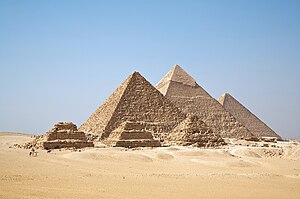
Well, because of the enduring nature of nouns and names, she took the pyramid as the symbol for this part of speech. The pyramid is one of the oldest, most enduring buildings on earth. They have lasted for years and years and years. The pyramid is a building that is stable on its base - they seem to stand eternally. Now, this pyramid will stay anywhere it is put – until it is moved elsewhere, where it will sit until I move it again. (when presenting this story, the adult will actually move and place the pyramid).  

In the grammar symbols, we use an equilateral triangle (each face of the pyramid).


Language in Elementary - Grammar Boxes

The grammar boxes were my first set of confusion when I started to make the material!

A necessary material? Perhaps you wouldn't have to use the boxes themselves; the exercises with the cards though are invaluable, and the layout with the boxes creates a special sense of importance - these aren't "just cards."

  • In the grammar boxes, each part of speech is distinguished by a color and that color does not always correspond with the grammar symbol; this incongruence was done intentionally, because Dr. Montessori did not want the children to just match the color of the symbol to the color of the cards. There is actually no significance to the colors except that they are different. 
  • The two colors that are the same in both the symbol and the grammar box material are the two most important parts of speech: the noun and the verb. 
  • The different colors help to distinguish one part of speech from the others. 
  • Each compartment within each box is a different color for a different part of speech. 
  • The grammar boxes themselves are empty except for little cover slips of white paper; all of the material we use with the grammar boxes is contained within the filler boxes. 
  • The number of each grammar box refers to the number of compartments within the box.
  • Each box contains a series of "filler boxes" which may be used in varying quantities by varying children.

Grammar Boxes by Number - the color in parentheses indicates the color for the new part of speech in card and compartment as well as the background of the sentence strips
(homeschool tip - 1) use colored cardstock with white or black *paint* markers (a bit pricey, but last a long time and usable for SO many things!)
2) use white card with colored permanent markers, colored pencils, colored pens, or the different colors of paint markers - perhaps draw a colored border around the edge just to emphasize the color.)

Grammar Box 1) It doesn't exist. It "would" be the noun box. But you can't make phrases with a single noun, so there's no grammar box. There are noun activities contained within filler boxes and the noun cards are black (the typical noun color).

Grammar Box 2: noun and article (orange or gold - some use tan)

Grammar Box 3: noun, article, adjective (medium brown)

Grammar Box 4: noun, article, adjective, verb (red - typical verb color)

Grammar Box 5: noun, article, adjective, verb, preposition (purple)

Grammar Box 6: noun, article, adjective, verb, preposition, adverb (pink)

Grammar Box 7: noun, article, adjective, verb, preposition, adverb, pronoun (green)

Grammar Box 8: noun, article, adjective, verb, preposition, adverb, pronoun,
conjunction (yellow)

Grammar Box 9: noun, article, adjective, verb, preposition, adverb, pronoun,
conjunction, interjection (royal blue)


Dr. Montessori selected these colors - again, the colors are not significant except that they do NOT match the color of the grammar symbol itself. Consider the fact that Dr. Montessori selected this lay-out before setting out to make any changes to the colors (as in, before trying to match the colors to the grammar symbols as in primary). Why would Dr. Montessori do it this way, with mis-matching colors?